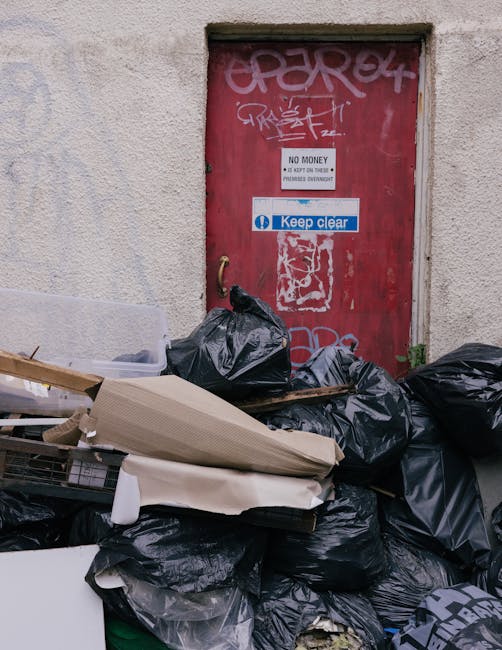
Avoid hidden rubbish removal charges Lambeth Council rules: a practical guide for Lambeth residents
If you are trying to avoid hidden rubbish removal charges Lambeth Council rules can feel like the bit nobody explains properly until after the job is done. One minute you're clearing a flat, a garage, or a tired sofa that's seen better days; the next, the quote has quietly grown teeth. Extra labour, restricted access, stair carries, parking, "contaminated" waste, missed collection windows... it adds up fast.
This guide breaks the topic down in plain English. You'll see how rubbish removal pricing usually works, where surprise costs creep in, what Lambeth-related practical checks matter, and how to compare quotes without getting caught out. It's written for real life, not a spreadsheet. Because let's face it, most people just want the waste gone and the bill to stay sensible.
For broader service context, it can also help to look at rubbish removal services, rubbish clearance options, and if your job is bigger than a few bags, a more complete home clearance may be the better fit.
Expert summary: the safest way to avoid nasty surprises is to get a quote based on the actual load, the access conditions, and the disposal route, then check what is included before anyone turns up with a van.
Table of Contents
- Why it matters
- How rubbish removal pricing and Lambeth rules work
- Key benefits and practical advantages
- Who this is for and when it makes sense
- Step-by-step guidance
- Expert tips for better results
- Common mistakes to avoid
- Tools, resources and recommendations
- Law, compliance, standards and best practice
- Options, methods, or comparison table
- Case study or real-world example
- Practical checklist
- Conclusion
- Frequently asked questions
Why it matters
Hidden charges are more than just annoying. They can turn a reasonable quote into a frustrating bill that feels impossible to argue with after the fact. In rubbish removal, the final price often depends on what was not obvious at first glance: how far the waste needs carrying, whether the truck can park nearby, whether items are dismantled, and whether the load matches the description you gave.
That is where many people get caught. A quote may look fine when you are comparing it side by side with others, but the fine print can hide extra charges for waiting time, bulky items, multiple flights of stairs, or disposal of certain materials. If you live in Lambeth, access is often part of the story too. Tight roads, shared entrances, controlled parking, basement flats, and busy collection times all affect the job.
There is also the council angle. Lambeth Council rules matter because waste still has to be handled responsibly. Even if you use a private clearance team, you should still think about lawful disposal, site access, and whether the job creates any street or parking issues. The point is not to overcomplicate things. It is to avoid paying twice: once for the job, and again for a problem that could have been planned for upfront.
Quick truth: the cheapest rubbish removal quote is not always the cheapest job. The real price is the number on the invoice after access, labour, and disposal are all counted properly.
If the job involves a full property emptying, a house clearance or flat clearance page may be more useful than a generic one-off collection. For single items, a specialist service like furniture disposal or sofa removal can sometimes be more transparent.
How rubbish removal pricing and Lambeth rules work
Most rubbish removal pricing is built around a few core variables. First comes the volume of waste. Then comes the type of waste. Then comes access. After that, any extras start to appear. A quote might be based on van space, weight, or a set job type, but the logic is similar: the cleaner and easier the job, the more predictable the price.
In practical terms, you will usually be asked to describe:
- what needs removing
- roughly how much there is
- where it is located in the property
- how easy it is to access
- whether anything needs dismantling
- whether the waste includes heavy, awkward, or regulated items
That last part matters more than people expect. For example, a bag of mixed household clutter is one thing. A mattress, broken wardrobe, and old washing machine are something else entirely. A builder's rubble pile is different again, and a job involving construction debris is often handled under builders waste clearance rather than ordinary household rubbish.
Lambeth-related practical rules are usually less about a secret pricing formula and more about real-world constraints: where the vehicle can stop, whether loading can happen safely, how long the team can spend on site, and whether the waste can be transferred without blocking neighbours or public areas. In a terraced street on a damp Tuesday morning, those details matter. A lot.
That is why good providers ask questions before they quote properly. They are not being awkward. They are trying to avoid "we thought it would be easy" misunderstandings later on.
Key benefits and practical advantages
Getting the pricing and the council-related practicalities right gives you more than just cost control. It gives you certainty. And certainty is worth paying attention to when you are already dealing with moving boxes, deadlines, or a room that has become a storage cave.
- No invoice shocks: you know what is included before the job begins.
- Faster decisions: when quotes are clear, you can compare them properly.
- Better access planning: the crew turns up prepared for stairs, parking, and loading.
- Lower dispute risk: fewer arguments about what was agreed.
- Cleaner compliance: waste is less likely to be handled carelessly or dumped wrongly.
- Less stress: you can focus on the move, the refurb, or the tidy-up itself.
There is another practical upside, too. A transparent quote often tells you more about the company than the price alone. If they are clear about labour, disposal, and access from the start, that is usually a good sign. Not a guarantee, of course, but a sign.
For bigger or mixed jobs, it can be smart to match the service to the waste type. A clearance of office furniture is different from garden offcuts, which is different again from domestic clutter or garage junk. You can see how a tailored office clearance, garden clearance, or garage clearance may avoid vague pricing altogether.
Who this is for and when it makes sense
This topic matters to just about anyone arranging rubbish removal in Lambeth, but especially if your property or project has one of those awkward little complications that never show up in a photo.
- tenants clearing out at the end of a lease
- landlords preparing a flat for new occupants
- homeowners decluttering before a sale
- families clearing bulky furniture after an upgrade
- small businesses emptying stock or old office items
- builders or tradespeople dealing with mixed site waste
It also makes sense when the waste is too much for a normal council collection, too awkward for a car boot run, or too time-sensitive to leave sitting around for days. If you are comparing a general pickup against a full clearance, the best fit may be a broader waste removal or waste clearance service rather than a single-item collection.
A common scenario in Lambeth goes like this: someone has a two-bedroom flat, a narrow stairwell, one heavy wardrobe, a sofa, and a pile of mixed bags. The initial quote sounds fine. Then the team arrives, realises the lift is out, the parking space is not reserved, and the wardrobe needs dismantling. Suddenly the "simple" job is anything but. That is the exact situation good planning is meant to prevent.
Step-by-step guidance
Here is a straightforward process to help you keep control of the cost and avoid surprise add-ons.
- List everything that needs removing. Be honest and specific. Old drawers, bags, carpet offcuts, broken shelves, the lot.
- Take photos in daylight. A quick picture from a few angles often helps more than a long message.
- Note access details. Stairs, lift, basement, rear garden, controlled entry, parking issues. Write it down.
- Separate waste types if possible. General household junk, garden waste, and builder's waste should not be lumped together in your head.
- Ask what is included in the quote. Labour, disposal, parking, congestion, loading time, and VAT if applicable should all be clear.
- Check what counts as an extra. Extra floors, heavy lifting, dismantling, hazardous items, or oversized loads often trigger add-ons.
- Confirm the collection window. The longer a crew waits around, the higher the risk of extra time charges. Fair enough, really.
- Get the agreement in writing. Even a simple email summary is better than a vague phone conversation.
If you are clearing a property after a tenant leaves, or before renovation, pairing the move with home clearance or house clearance can be more efficient than booking piecemeal removals. For an individual bulky item, a focused service such as furniture disposal may be cleaner and easier to price.
One small but useful habit: send the same set of details to every provider. If each company receives a different description, the quotes will not be comparable. That sounds obvious, but people skip it all the time.
Expert tips for better results
After years of seeing customers get caught out by vague quotes, a few habits stand out as especially useful.
- Be precise about "easy access". To you, that might mean a ground-floor flat. To the crew, it still might mean a long walk from the road.
- Ask about minimum charges. Even a tiny load may have a base cost.
- Confirm whether labour includes loading from inside the property. Some companies expect the waste to be brought outside first. Others do not.
- Separate reusable items from true waste. It helps the quoting conversation and can reduce confusion on the day.
- Check if the job is best booked as same-day or scheduled clearance. Rushed jobs can be more expensive than planned ones.
- Keep one contact person. Especially useful if you are arranging clearance for a landlord, estate agent, or family property.
A slightly boring tip, but a powerful one: make a written list before you call. People often think they can "just explain it as they go". Then they forget the broken chair in the shed, the bag of plaster dust, or the stack of old office files tucked behind the door.
Also, if you suspect there are mixed waste categories, mention them early. A service built around waste collection can sometimes be quoted differently from a straight pickup, especially when items need sorting or separate disposal routes.
Common mistakes to avoid
Most hidden charges are not magical. They come from predictable mistakes. The good news is that most of them are avoidable.
- Only describing the load in vague terms. "A bit of rubbish" does not help anyone.
- Forgetting access problems. Narrow stairs and parking restrictions can change the price quickly.
- Assuming all waste types cost the same. They do not.
- Not checking whether dismantling is included. Flat-pack furniture is rarely as simple as it looks.
- Ignoring the small print on waiting time. A delayed handover can become an extra charge.
- Booking too late in a tight move-out window. That is when panic pricing tends to creep in.
- Comparing only the headline price. The headline is not the whole story.
There is also the classic mistake of assuming council rules and private collections are interchangeable. They are not. Private waste removal still needs to follow proper disposal practice, but the operational rules around access, parking, and loading are part of the service contract, not a council magic wand. Sorry, there is no magic wand for rubbish. Shame, really.
If your job includes bulky seating, it can help to check a specific sofa removal option rather than assuming it will fall under a generic "one item" quote.
Tools, resources and recommendations
You do not need specialist software to avoid hidden fees. A few simple tools and habits are enough.
- Phone photos: take them from the doorway, then close-up shots of awkward items.
- Notes app: keep one list of waste types, room locations, and access details.
- Basic measuring tape: useful for oversized furniture or tight doorways.
- Calendar reminder: set the collection date, parking time, and any building access slot.
- Email: keep a paper trail of the quote and what was agreed.
When a job is more involved, browsing the relevant service page first can help you phrase your request better. For example, a cluttered loft or overfilled utility room may fit a general rubbish clearance, while larger domestic jobs might be better handled through house clearance. A commercial office move may suit business waste or office clearance instead.
One practical recommendation: do not shop only on speed. The fastest collection is not always the clearest or the safest. Sometimes an extra day to get the quote right saves both money and grief.
Law, compliance, standards and best practice
Here we need to be careful and sensible. Waste disposal in the UK is regulated, and households, landlords, tradespeople, and businesses all have responsibilities. Exact obligations can vary depending on the waste type and who produces it, so it is best not to rely on guesswork.
As a rule of thumb, you should expect any reputable waste removal provider to:
- handle waste responsibly and lawfully
- be clear about what they can and cannot take
- avoid misleading pricing practices
- separate restricted or specialist materials where needed
- explain any conditions that affect the quote
From a Lambeth perspective, the council rules that usually affect customers most are practical rather than mysterious: do not obstruct the street, do not dump waste illegally, and make sure the job is arranged in a way that does not create avoidable problems for neighbours or shared access areas. If you are in a managed block, leasehold property, or busy terrace, that is especially relevant.
For best practice, keep your waste description accurate. Never mislabel builder's debris as general household waste to get a cheaper price. That can cause disputes, rejected collection, or worse, poor disposal handling. If the job involves mixed materials, say so up front. A reliable operator will usually explain the right route rather than pretending every load is the same.
It is also wise to review the provider's own terms before booking. Their service conditions should explain limitations, responsibilities, cancellations, and what happens if access is not as described. You can look at the site's terms and conditions and privacy policy pages if you want to understand how information and booking details are handled.
Options, methods, or comparison table
Choosing the right disposal method can reduce hidden charges almost immediately. Here is a simple comparison.
| Option | Best for | Risk of hidden charges | Notes |
|---|---|---|---|
| General rubbish removal | Mixed household waste, bags, clutter | Medium | Can be cost-effective if access is straightforward |
| Rubbish collection | Smaller, well-defined loads | Low to medium | Best when items are easy to identify and load |
| House clearance | Whole properties, end-of-tenancy clear-outs | Lower if surveyed properly | More structured pricing, but access still matters |
| Furniture disposal | Bulky single items or a few large pieces | Low | Good for sofas, wardrobes, tables |
| Builders waste | Renovation debris and construction materials | Medium to high | Needs accurate description because the waste type matters |
The main lesson is simple: use the service that matches the waste. If you force the wrong service fit, the quote gets vague, and vague pricing is where surprises breed.
Case study or real-world example
Picture a two-bedroom flat near a busy Lambeth street on a wet Friday afternoon. The customer wants an old sofa removed, a wardrobe taken apart, six bags of mixed junk cleared, and a broken desk carried down two flights of stairs. The initial message says, "a few items, easy access." Not ideal.
When the provider asks follow-up questions, the picture changes. The sofa is a large corner model, the wardrobe is bolted, the stairwell is narrow, and there is no easy parking directly outside. Suddenly the job is no longer a "few items" job. It is a planned clearance with labour, access time, and likely parking constraints.
In that situation, a clear quote based on the real load would probably be more accurate than a low headline price. The customer may still choose to proceed, but now the decision is informed. No drama, no awkward phone calls afterward, and no surprise on the invoice. That is what good planning looks like in the real world.
On the same street, another customer with a single sofa and a couple of bags might simply need sofa removal plus a small rubbish collection. Same postcode, very different job. That is why one-size-fits-all pricing often misleads people.
Practical checklist
Use this quick checklist before you book:
- Have you listed every item clearly?
- Do you know whether the waste is household, furniture, builders, garden, or mixed?
- Have you shared access details, including stairs and parking?
- Have you asked what the quote includes?
- Have you checked for extras such as dismantling, waiting time, or heavy lifting?
- Have you asked whether the team will carry from inside the property?
- Have you confirmed the collection time and any building restrictions?
- Have you saved the quote in writing?
- Have you checked the provider's terms before confirming?
- Are you comparing like with like, not just headline prices?
If you are still unsure which route fits your job, a quick look at waste disposal and waste removal options can help you frame the enquiry properly before you speak to anyone.
Conclusion
To avoid hidden rubbish removal charges Lambeth Council rules should be treated as part practical planning, part common sense, and part careful comparison. The important thing is not to chase the lowest number on the page. It is to get a quote that matches the real job, the real access, and the real waste type.
When you do that, the whole process becomes calmer. The collection goes more smoothly, the crew knows what to expect, and you are far less likely to be caught off guard by extra fees. That alone can make a stressful clear-out feel much more manageable. And honestly, that matters more than people admit.
Get a free quote today and see how much you can save.
If your rubbish removal is part of a bigger declutter, start with a clear scope, ask the awkward questions early, and keep everything in writing. A little care up front saves a lot of hassle later. That's the quiet win.
Frequently Asked Questions
What are hidden rubbish removal charges?
They are extra fees that appear after the initial quote, often for labour, access, parking, waiting time, dismantling, or waste type. The problem is usually vague quoting rather than the job itself.
How can I avoid surprise fees when booking rubbish removal in Lambeth?
Give an accurate description of the waste, share access details, ask what is included, and get the agreement in writing. Photos help a lot too, especially for bulky or awkward items.
Does Lambeth Council set rubbish removal prices?
No, private rubbish removal companies set their own prices. Lambeth Council rules mainly affect safe handling, access, and lawful disposal expectations, not the company's private quote structure.
Why does access affect the quote so much?
Because access changes the time and labour involved. Stairs, long carries, narrow entrances, and difficult parking all make the job slower, which can increase the cost.
Are furniture removal jobs cheaper than general rubbish clearance?
Sometimes, yes, especially if the item count is low and the load is clear. A single sofa or wardrobe is often easier to price than a mixed pile of household waste.
What should I ask before accepting a quote?
Ask whether labour, disposal, parking, waiting time, and heavy lifting are included. Also ask what counts as an extra and whether the team will carry items from inside the property.
What if my waste includes builders' debris or renovation material?
Say so straight away. Builders' waste is often priced differently from household rubbish because it is heavier, denser, and may need a separate disposal route.
Is it better to choose the cheapest quote?
Not always. A cheap quote can become expensive if it excludes obvious costs. Compare the full scope of the service, not just the headline price.
Should I separate recyclable items before collection?
If you can do it easily, yes. It may help with sorting and can reduce confusion, though the provider's pricing model will still depend on the actual load and service type.
What if the team arrives and the job is bigger than described?
They may revise the quote. That is why accurate descriptions and photos matter. It is much better to identify the scale before anyone starts loading.
Do I need a written quote?
Yes, ideally. A written quote or email summary creates a clear record of what was agreed and helps avoid disputes later on.
Which service is best for a full flat clear-out?
A dedicated flat clearance or wider home clearance service is usually a better fit than a small one-off collection, especially if the property contains mixed items.
Can business waste be handled the same way as household rubbish?
Not necessarily. Business waste often needs a different approach, especially where records, mixed materials, or office equipment are involved. A dedicated business waste or office clearance service can be more appropriate.
What is the safest next step if I am still unsure?
Make a list of everything you want removed, take photos, and request a quote based on the actual job rather than a rough guess. That is usually the easiest way to stay in control and avoid hidden rubbish removal charges.